Introduction
In today’s hyper-visual digital landscape, compelling imagery isn’t just an advantage—it’s a necessity. From eye-catching product shots to engaging social media content, businesses constantly demand high-quality visuals. Yet, the traditional pipeline of photography, graphic design, and iteration can be slow, resource-intensive, and costly. Enter AI image generation: a revolutionary technology poised to transform how companies approach visual content creation, enabling them to produce stunning, unique visuals at unprecedented speed and scale.
This isn’t merely a technological novelty; it’s a strategic imperative. Forward-thinking enterprises are already leveraging AI to streamline workflows, reduce marketing overheads, and unlock new creative possibilities. Imagine an e-commerce brand generating hundreds of lifestyle product images for diverse demographics in hours, not weeks, or a marketing team crafting hyper-personalized ad campaigns without an extensive photo shoot budget.
This practical guide will walk you through the commercial applications of AI image tools, from understanding their core mechanics to navigating legal considerations and integrating them seamlessly into your existing design workflows. Prepare to discover how AI can empower your business to create visuals that capture attention and drive conversions.
What Is AI Image Generation and Why It Matters in 2024
AI image generation refers to the process where artificial intelligence algorithms create images from textual descriptions (prompts) or other input data. These sophisticated models, trained on vast datasets of images and their corresponding descriptions, learn to understand patterns, styles, and concepts, enabling them to synthesize entirely new, unique visual content. In 2024, this capability isn’t just fascinating; it’s a critical enabler for businesses striving for efficiency, personalization, and creative agility.
For businesses, the impact is profound. It democratizes digital design, allowing even small teams to produce high-caliber visuals. It accelerates content pipelines, significantly reduces costs associated with traditional photography and graphic design, and offers unparalleled opportunities for personalization. Brands can now tailor visuals to specific audience segments or even individual customers, creating more resonant and effective marketing campaigns.
The Rise of AI in Visual Storytelling
The ability to create captivating visuals rapidly fuels compelling storytelling. Businesses can experiment with different aesthetics, themes, and moods for their campaigns without the usual constraints. This allows for extensive A/B testing of visual elements, leading to data-driven improvements in engagement and conversion rates. The speed and flexibility of generative AI for marketing mean brands can respond to trends faster, maintaining relevance and capturing audience attention.
- Speed & Efficiency: Generate visuals in minutes, not days or weeks.
- Cost Reduction: Significantly cut expenses related to photographers, models, and studio rentals.
- Creative Expansion: Explore endless stylistic possibilities and conceptual designs that might be too complex or costly to produce traditionally.
- Consistency & Scale: Maintain brand identity across numerous assets while producing content at an enterprise level.
- Personalization: Tailor visuals for niche audiences or individual customer journeys, enhancing engagement.
How It Works: Deep Dive
The magic of AI image generation begins with a prompt—a textual description of the desired image. This prompt acts as instructions for the AI model. The model then processes this text, translating it into a latent space representation, and iteratively refines a randomly generated image until it aligns with the prompt’s specifications. This process typically involves a ‘diffusion’ model, which starts with noise and gradually denoises it into a coherent image.
Understanding Prompt Engineering
Success with AI image tools hinges on effective prompt engineering for images. It’s the art and science of crafting precise, detailed, and evocative text prompts to guide the AI towards your desired output. A good prompt specifies not just the subject, but also style, mood, lighting, composition, and even camera angles.
Prompt Template Example:
- General:
A product shot of a sleek, minimalist smartwatch, on a modern wooden desk, diffused natural light, soft shadows, 8k, professional photography style. - Marketing Visual:
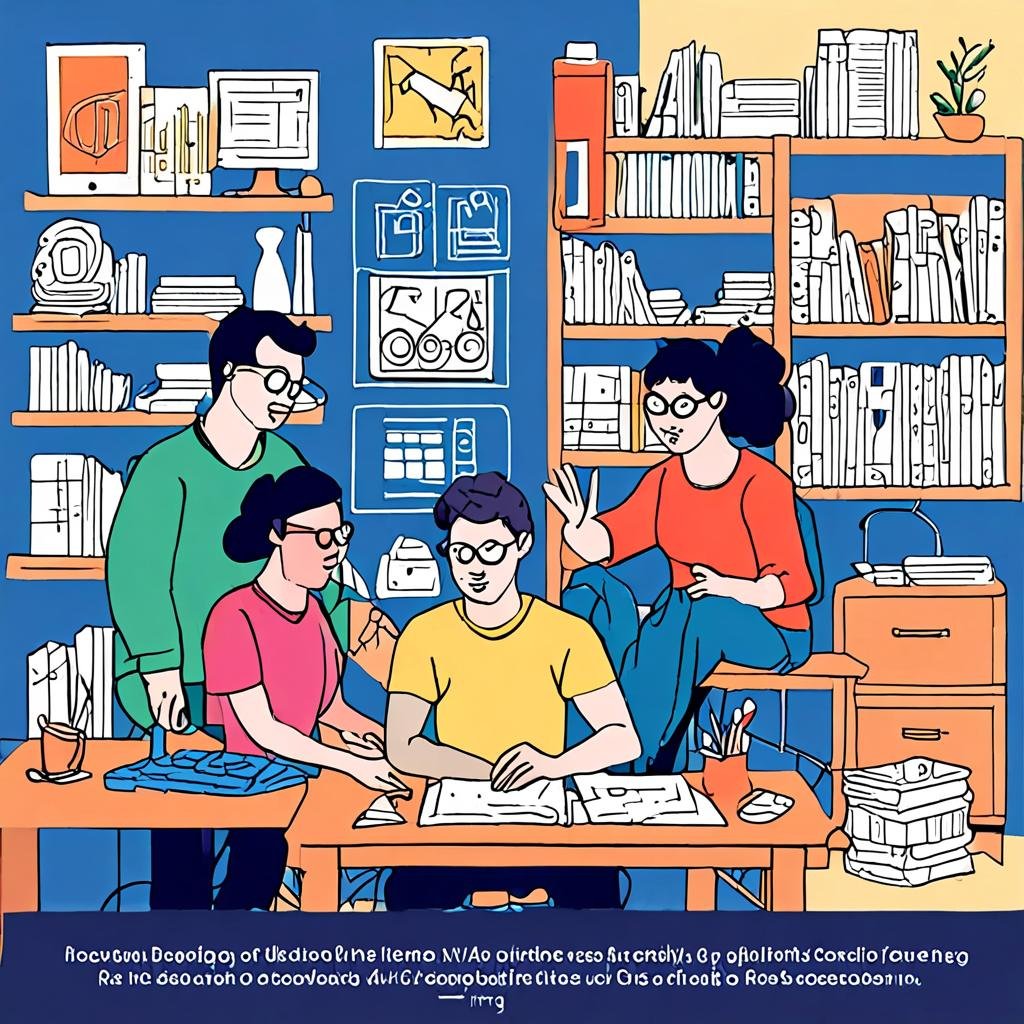
Happy diverse business team collaborating in a modern, sunlit office, blurred background, inspiring and dynamic, corporate stock photo style. - Artistic Concept:
Surreal landscape where neon-lit futuristic city meets an ancient forest, cyberpunk aesthetic, dramatic lighting, highly detailed.
Iterative Refinement and Integration
Rarely does the first attempt yield a perfect image. The process is iterative, involving generating multiple variations, adjusting the prompt, and refining until the desired quality and aesthetic are achieved. Once generated, images can be further enhanced using traditional digital design tools for upscaling, color correction, or blending with other assets, ensuring they meet professional standards and brand guidelines.
Real-World Case Study
Consider ‘EcoBloom,’ a burgeoning e-commerce brand specializing in sustainable home goods. Their challenge was rapidly expanding their product line, requiring hundreds of unique, high-quality product images for their website and social media campaigns. Traditional photography was slow, costing upwards of $500 per product shoot and taking weeks to deliver retouched images, hindering their launch schedule and straining their marketing budget.
Code Comic stepped in to implement an AI image generation for business strategy. We leveraged advanced AI tools to generate a diverse range of lifestyle product shots, showcasing EcoBloom’s items in various interior settings, with different lighting conditions, and alongside diverse models. Instead of actual shoots, prompts were meticulously crafted to describe desired scenes, products, and target demographics.
Result: EcoBloom was able to generate over 300 unique product and lifestyle images in just two weeks, reducing photography costs by 85%. This allowed them to launch five new product lines a month ahead of schedule, resulting in a 15% increase in product page conversion rates due to the varied and appealing visuals, and a 20% uplift in social media engagement for posts featuring AI-generated content. This dramatically improved their market agility and ROI on visual content.
Tools, Stack, or Framework Breakdown
The landscape of AI image generation tools is rapidly evolving, with several platforms offering distinct advantages for commercial use. Choosing the right tool depends on your specific needs, creative control requirements, and budget.
| Tool | Purpose | Best For | Complexity |
|---|---|---|---|
| Midjourney | Creative art, conceptual visuals, high aesthetic quality | Marketing campaigns, artistic briefs, branding, abstract concepts | Medium |
| DALL-E 3 | Text-to-image, detailed scenes, in-image text generation | Product shots, realistic scenarios, complex compositions, social media graphics | Low-Medium |
| Stable Diffusion | Open-source, extensive customization, local hosting options | Developers, custom pipelines, unique styles, API integration, fine-tuning | High |
| Adobe Firefly | Integrated into Creative Cloud, generative fill, style transfer | Graphic designers, existing Adobe users, quick asset generation within workflows | Low-Medium |
Each tool excels in different areas. Midjourney is renowned for its artistic flair and ability to generate visually stunning, often ethereal, imagery. DALL-E 3, integrated with ChatGPT, offers exceptional prompt understanding and the ability to generate specific, realistic scenes. Stable Diffusion provides unparalleled flexibility for developers and power users who need custom models and integrations, making it ideal for scaling AI image tools commercial use. Adobe Firefly, on the other hand, is built directly into Adobe’s ecosystem, simplifying its adoption for existing design teams.
Common Mistakes to Avoid
While AI image generation offers immense potential, navigating its complexities requires awareness to avoid common pitfalls:
- Vague or Generic Prompts: Ambiguous prompts lead to uninspired or inaccurate results. Always be specific about style, subject, composition, and mood.
- Ignoring Copyright and Licensing: The legal landscape for AI art copyright 2024 is evolving. Ensure you understand the terms of use for your chosen tool and the implications for commercial deployment to avoid future disputes.
- Lack of Human Oversight: AI is a tool, not a replacement for human creativity and judgment. Relying solely on raw AI output without human curation, refinement, and quality control can lead to inconsistent or off-brand visuals.
- Over-reliance on Default Settings: Most tools offer advanced parameters (aspect ratios, stylization, negative prompts). Not exploring these limits the quality and uniqueness of your output.
- Neglecting Brand Consistency: Without careful prompt engineering and post-processing, AI can generate visuals that don’t align with your brand’s established aesthetic, diluting your identity.
- Underestimating Post-Processing Needs: AI images often require touch-ups, color correction, upscaling, or integration into larger designs to be truly print-ready or website-optimized.
Quick Wins
Leveraging AI image generation for immediate business impact doesn’t require a complete overhaul. Here are some quick wins:
- Rapid Prototyping for Ad Concepts: Generate multiple visual concepts for ad campaigns in hours, allowing for quicker internal review and client feedback before committing to expensive production.
- High-Volume Social Media Content: Create a consistent stream of visually appealing posts, stories, and reels for various platforms, keeping your audience engaged without significant design overhead. This is key for scaling social media presence.
- Personalized Marketing Visuals: Quickly adapt existing marketing visuals or generate new ones that speak directly to different customer segments, enhancing relevance and conversion.
- Internal Presentation & Report Graphics: Instantly visualize complex data or abstract concepts for internal meetings and reports, making communication clearer and more engaging.
- E-commerce Product Variations: Generate additional product shots showcasing items in different settings, from various angles, or with subtle modifications, expanding your catalog efficiently. This is especially useful for e-commerce shopping platforms.
FAQs
What are the primary business uses for AI image generation?
The primary business uses include generating product photography, marketing visuals, social media content, website banners, concept art, internal presentation graphics, and personalized ad creatives. It streamlines visual content pipelines and significantly reduces costs.
How do AI image tools compare in quality?
Quality varies, but top tools like Midjourney, DALL-E 3, and Stable Diffusion can produce incredibly high-quality images. Midjourney excels in artistic and conceptual aesthetics, while DALL-E 3 is great for realistic scenes and specific object generation. Stable Diffusion offers robust customization.
Is AI-generated imagery copyrighted?
The copyright status of AI-generated imagery is complex and actively debated. In the U.S., purely AI-generated works without significant human creative input may not be eligible for copyright protection. It’s crucial to consult legal advice and understand each platform’s terms.
Can I use AI images for commercial purposes?
Yes, most leading AI image generation platforms offer commercial licenses, often included with paid subscriptions. However, always review the specific terms and conditions of the tool you are using to ensure compliance and avoid potential legal issues.
What is prompt engineering?
Prompt engineering is the craft of creating precise and detailed text instructions (prompts) for AI models to generate specific and high-quality images. It involves understanding how AI interprets language and iteratively refining prompts for optimal results.
How can Code Comic help integrate AI image tools?
Code Comic, with its expertise in AI-powered development and digital strategy, can help businesses identify the best AI image tools for their needs, develop effective prompt engineering strategies, integrate AI into existing workflows, and ensure legal compliance for commercial use.
What are the cost implications of using AI image tools at scale?
While often significantly cheaper than traditional methods, scaling AI image generation involves subscription costs for tools and potential investment in internal training for prompt engineering. However, the ROI in terms of speed and volume typically far outweighs these costs.
How do I maintain brand consistency with AI-generated visuals?
Maintaining brand consistency requires careful prompt engineering to define style, color palettes, and thematic elements. Post-processing with traditional graphic design software and adhering to a strict brand style guide are also essential steps.
What’s the future of visual content creation with AI?
The future of visual content creation with AI involves highly personalized content, dynamic visual adaptation to user behavior, advanced 3D asset generation, and even AI-driven video production, making content pipelines more agile and responsive than ever before.
What are the ethical considerations when using AI for visuals?
Ethical considerations include bias in training data leading to stereotypes, potential for deepfakes or misinformation, environmental impact of AI computation, and the displacement of human creative jobs. Responsible AI practices are crucial.
Conclusion
The advent of AI image generation for business marks a pivotal moment in the evolution of visual content. It’s no longer a niche technology but a powerful, accessible tool that allows businesses to scale their visual output, innovate their marketing strategies, and connect with audiences in more dynamic and personalized ways. The ability to create compelling imagery at scale is transforming how brands tell their stories and engage their customers.
Harnessing this potential effectively requires a strategic approach, encompassing skilled prompt engineering, a clear understanding of tool capabilities, and an awareness of the evolving legal and ethical landscape. For enterprises looking to stay ahead, integrating AI into their creative and marketing workflows isn’t just an option—it’s a competitive advantage.
Ready to unlock the full potential of AI for your business’s visual strategy? Explore how Code Comic can empower your team with cutting-edge marketing communications and AI solutions. Book a call with our experts today and transform your visual content creation.