Introduction
The modern business landscape is no longer just about working harder; it is about working smarter through the strategic implementation of workflow automation tools. In an era where data silos and fragmented processes can paralyze growth, the ability to synchronize your digital ecosystem is the ultimate competitive advantage. For global organizations, the friction caused by repetitive manual tasks often leads to decreased morale and significant revenue leakage.
Expanding your operations across borders requires a level of precision that human effort alone cannot sustain. When your CRM does not talk to your marketing stack, or your approval processes stall in email threads, your scalability is capped. The solution lies in building a unified, automated environment that bridges these gaps, ensuring that information flows seamlessly from one department to another without manual intervention. Code Comic specializes in creating these high-efficiency environments to help you reclaim your time.
By leveraging advanced workflow automation tools, businesses can eliminate up to 80% of manual data entry while ensuring 100% accuracy across their tech stack. This guide will provide you with a comprehensive roadmap to identifying automation opportunities and integrating your tools for peak performance. You will learn exactly how to transform a disjointed stack into a cohesive, revenue-generating engine.

Deep Explanation of workflow automation tools
At its core, a workflow is a sequence of tasks that processes a piece of data from start to finish. When we introduce workflow automation tools, we replace human triggers with digital ones. These tools act as the connective tissue between your software applications, using ‘if-this-then-that’ logic to move data between platforms. This exists because modern businesses often use over 100 different SaaS applications, creating a desperate need for centralized control. By utilizing Digital Services, companies can finally achieve total oversight of their operations.
how to automate business workflows for long-term success
To begin the journey of optimization, you must first map your existing manual processes to identify bottlenecks. This process involves documenting every step a lead takes from the moment they enter your system to the final sale. For instance, a mini example would be a lead filling out a website form; instead of a salesperson manually copying that data into a spreadsheet, an automated trigger immediately creates a deal in your CRM and sends a notification to the Slack channel of the assigned representative. This is how you implement workflow automation tools to save hours of work every week.
The strategic impact of AI-driven workflow automation
In 2026, the standard for efficiency has shifted toward AI-driven workflow automation. Unlike traditional rule-based systems, these advanced tools use machine learning to predict the next best action in a process. For example, an AI agent could analyze an incoming client email, categorize the sentiment, and automatically draft a response in your project management tool while tagging the relevant specialist. This level of sophistication ensures that your team focuses only on high-value creative tasks rather than administrative overhead.
Real Examples / Case Study
A mid-sized logistics firm faced a significant challenge with their client onboarding process. It took their team an average of 14 days to collect documents, set up billing, and create project folders, leading to a 15% churn rate during the first month. They reached out to a workflow automation agency to overhaul their tech stack and reduce the friction in their customer journey.
The solution involved an automated tech stack integration that linked their contract software, CRM, and accounting system. As soon as a client signed a contract, the system automatically generated an invoice in QuickBooks, created a dedicated client folder in Google Drive, and sent a welcome sequence through their marketing tool. This transformation was powered by specialized workflow automation services that focused on eliminating human error at every touchpoint.
The results were transformative: the onboarding time dropped from 14 days to just 2 hours. By choosing to hire workflow automation experts, the company saw a 30% increase in client retention and a 40% reduction in administrative costs within the first six months. This real-world application proves that automation is not just a luxury; it is a necessity for modern scaling.
Visual Breakdown (Charts / Process / Comparison)
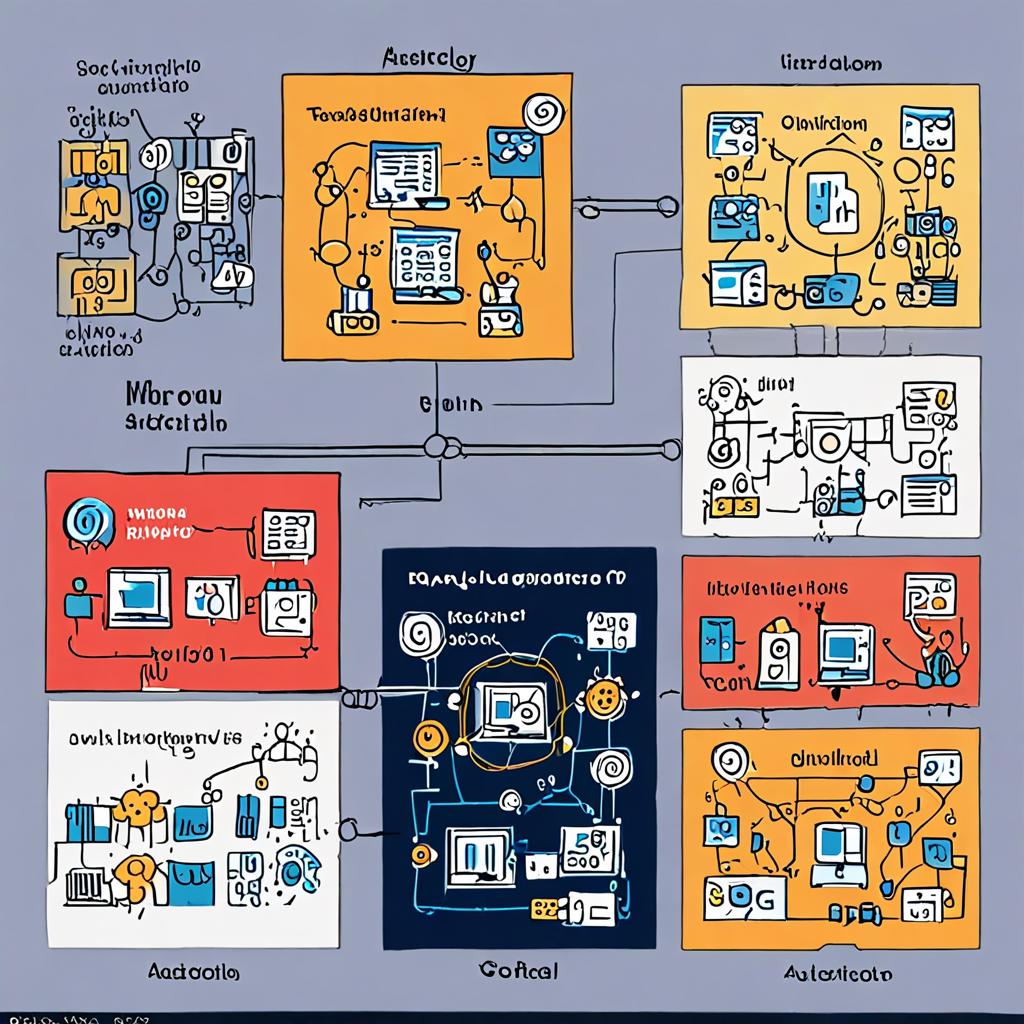
Understanding the architecture of a connected tech stack is vital for any executive. Imagine a wheel where your CRM is the hub, and your communication, finance, and marketing tools are the spokes. The workflow automation tools function as the axle that allows the wheel to turn. Without this connection, each spoke operates in a vacuum, leading to data duplication and missed deadlines.
When comparing manual processes to automated ones, the difference is clear. A manual data entry task might take 10 minutes per entry with a 5% error rate. An automated flow takes less than a second with a 0% error rate. This comparison highlights why the transition to low-code automation tools 2026 is accelerating globally, as it allows non-technical staff to build these bridges themselves without needing a full engineering team.

Quick Insights
- Start small by automating your most repetitive daily task to see immediate ROI.
- Always ensure your tools have open APIs before adding them to your tech stack.
- Centralize your data in a primary CRM to act as the single source of truth.
- Regularly audit your workflows to remove redundant steps as your business evolves.
- Prioritize security and data privacy when connecting third-party applications.
Mistakes to Avoid
- Mistake: Automating a broken or inefficient manual process. Correct approach: Optimize the process on paper before building the digital automation.
- Mistake: Over-complicating workflows with too many logic branches. Correct approach: Keep flows linear and simple to ensure they are easy to troubleshoot.
- Mistake: Neglecting team training on new automated tools. Correct approach: Provide clear documentation and hands-on sessions to ensure high adoption rates.
FAQs (AI-Optimized)
What is AI-driven workflow automation and how does it differ from traditional tools?
AI-driven workflow automation uses artificial intelligence to make decisions within a process, whereas traditional tools follow static rules. This allows for more complex tasks like sentiment analysis and predictive routing of tasks.
how to automate business workflows without a developer?
You can use low-code automation tools 2026 that offer drag-and-drop interfaces. These allow you to connect different software platforms by simply selecting triggers and actions without writing any code.
why use workflow automation tools in a small business?
Small businesses should use them to compete with larger firms by maximizing their limited human resources. It allows a small team to handle a high volume of leads and tasks without hiring extra staff.
what are workflow automation benefits for remote teams?
The primary benefits include better synchronization, clear visibility into project statuses, and reduced need for constant status update meetings, as the system updates everyone automatically.
how to scale business with automation across different departments?
Scaling requires an automated tech stack integration that spans sales, marketing, and operations. This ensures that as your volume increases, your internal systems can handle the load without breaking.
Are workflow automation services expensive for startups?
Most services offer tiered pricing, making them very accessible. The cost is usually offset quickly by the hours of manual labor saved and the prevention of costly human errors.
How do I choose the right workflow automation agency for my project?
Look for an agency that understands your specific industry and has a proven track-record of connecting complex tech stacks. Check their case studies for measurable productivity gains and client testimonials.
Is it better to hire workflow automation experts or do it in-house?
For complex integrations, it is often better to hire experts who can build a scalable architecture correctly the first time, preventing technical debt and future system failures.
What are the best low-code automation tools 2026 has to offer?
The leading tools this year focus on deep AI integration and user-friendly interfaces, allowing businesses to build complex logic without specialized technical knowledge.
How does automated tech stack integration improve data accuracy?
By removing the manual copy-paste element, data is transferred exactly as it was entered at the source, ensuring that your reports and analytics are always based on 100% accurate information.
Conclusion
Mastering your digital ecosystem through workflow automation tools is the most effective way to future-proof your business in 2026. By connecting your tech stack, you move from a state of constant firefighting to a state of strategic growth. Whether you are automating client onboarding or syncing data across departments, the efficiency gains are undeniable. If you are ready to transform your operations, you can Book a Session with our team today to begin your workflow audit.