Introduction
Choosing the right app development company in 2026 can make or break your digital transformation strategy. In a fast-evolving digital landscape, businesses face a critical dilemma when planning their product launches: should they build native, cross-platform, or progressive web apps? Navigating these options requires a clear understanding of user experience, platform performance, development budgets, and long-term maintenance needs.
As technology advances, selecting a path without clear strategic alignment can lead to wasted budget and delayed time-to-market. Whether you are trying to hire app developers for a bespoke iOS or Android application, or deploying a lightweight web solution, this guide is designed to clarify the landscape of modern mobile development. Let us dive deep into how these architectural choices impact your business goals this year.

What Is an App Development Company and Why It Matters in 2026
An app development company is more than just a vendor that writes code; it is a strategic partner that translates complex business objectives into highly functional digital products. In 2026, the mobile market is more fragmented than ever, requiring advanced technical expertise to ensure security, high performance, and seamless user experiences across various devices. Working with a specialized agency helps businesses bypass costly technical debt and build scalable architectures.
How an App Development Company Drives Product Value
Modern businesses rely on professional agencies to navigate the complex choices of platform-specific architectures. A top-rated app development company will evaluate your target audience, functional requirements, and budget constraints to recommend the perfect tech stack. Rather than forcing every project into a single framework, an elite app development agency offers tailormade options for native, cross-platform, or progressive web approaches, offering tailored custom mobile app services for enterprises globally.
Here are the core benefits of partnering with an expert team for your next digital initiative:
- Access to seasoned experts across multiple programming frameworks and modern development environments.
- Accelerated time-to-market with proven CI/CD workflows and automated quality assurance.
- Substantial reduction in overall enterprise app development cost through optimized architectural planning.
- Integration of cutting-edge features like AI, offline synchronization, and robust push notifications.

How It Works: Deep Dive
To make an informed decision, let us dissect the functional differences, architectures, and strategic trade-offs of the three primary app architectures in 2026.
Native App Development: Uncompromising Performance
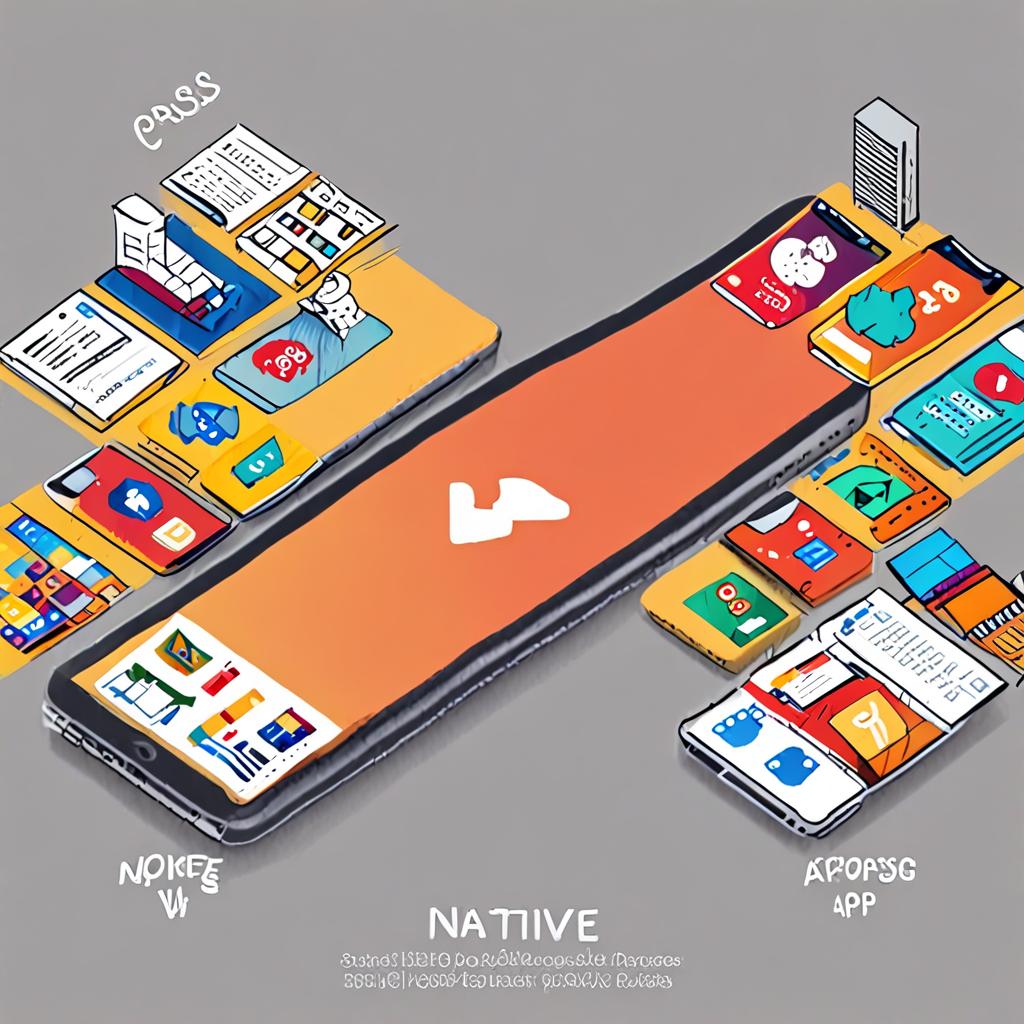
Native application development involves building separate codebases for iOS (using Swift) and Android (using Kotlin). This approach delivers unrivaled speed, direct hardware access, and offline capability. For performance-intensive products, it remains the absolute gold standard. However, maintaining two separate teams can increase your long-term maintenance overhead.
Cross-Platform Frameworks: The Unified Codebase Approach
In 2026, cross-platform app development has evolved to match native performance in almost all business scenarios. Using tools like Flutter or React Native, developers can write once and deploy across both iOS and Android. This drastically lowers initial development costs and streamlines future updates, making it highly attractive for startups and enterprise scaling.
Progressive Web Apps: Zero-Install Accessibility
Progressive Web Apps (PWAs) run directly in the mobile browser while offering app-like interactions. Key progressive web app benefits include discoverability via search engines, no app store middleman fees, and instant updates. They are highly efficient for content-heavy platforms, e-commerce stores, and operations with constrained development budgets.
Let us compare these architectures head-to-head:
| Feature | Native Apps | Cross-Platform | Progressive Web Apps (PWAs) |
|---|---|---|---|
| Development Cost | High (Dual Codebase) | Medium (Single Codebase) | Low (Web-based) |
| Performance & Speed | Maximum / Hardware-Optimized | Excellent (Near-Native) | Good (Browser-bound) |
| Device Integration | Full Access (sensors, camera, BT) | High Access (via plugins) | Limited Access |
| Distribution | App Stores (Apple & Google) | App Stores (Apple & Google) | Direct URL (Web browser) |
Real-World Case Study
A leading global logistics brand struggled with fragmented operational tools. Their field workers used varying devices, while end-users demanded a premium tracking experience. Maintaining three distinct portals caused severe sync delays and spiraling costs.
The team engaged Code Comic to build unified custom app development services that streamlined operations. By implementing a cross-platform system utilizing Flutter framework integration, we merged their separate platforms into a single unified workspace.
The outcomes over a 12-month period post-deployment were substantial:
- Development timeline reduced by 40% compared to native estimations.
- Consistent 99.9% crash-free sessions across both iOS and Android platforms.
- Maintenance overhead fell by 45% due to the single codebase architecture.
- Operational efficiency for internal logistics staff rose by 35% through instant cloud syncing.
Tools, Stack, or Framework Breakdown
Choosing the right technology requires matching your functional goals with appropriate software tools. Below is an evaluation of the leading development systems utilized by the best app development company engineers today.
| Tool | Purpose | Best For | Complexity |
|---|---|---|---|
| Swift & Kotlin | Native platform architectures | High-performance utility and gaming apps | High |
| Flutter | Cross-platform deployment | Rapid scaling across multiple operating platforms | Medium |
| React Native | JavaScript-based cross-platform apps | Dynamic interactive experiences with complex UI | Medium |
| Angular & Vue.js | Progressive Web App environments | Fast, web-based digital experiences with offline cache | Low-Medium |

Common Mistakes to Avoid
Building an app is a major investment, yet many businesses fall into preventable traps during planning.
- Choosing Native When a PWA Suffices: Many brands spend high amounts on native architecture when a robust web-based application would cover all functional requirements.
- Underestimating Maintenance Budgets: App launches are just the beginning. Long-term updates, security patches, and OS upgrades usually consume 20% of the initial cost annually.
- Ignoring mobile app trends 2026: Failing to integrate AI capabilities, biometric authentications, or dynamic UI layouts can make your digital platform feel obsolete.
- Hiring Solely Based on Low Pricing: Low-cost code often results in poor performance and security vulnerabilities, causing businesses to spend more rebuilding the product later.
Quick Wins
Maximize your return on investment with these immediately actionable development strategies:
- Map out a Minimum Viable Product (MVP): Focus your initial release on the core value proposition. This reduces initial mobile app development pricing and allows you to test user feedback quickly.
- Utilize Hybrid Codebases for Scale: If building a cross-platform solution, use pre-built custom modules for native hardware integration to save time.
- Focus Heavily on UX Design: Ensure intuitive navigation. For example, optimize retail platforms with direct checkout flows and seamless guest options.
- Automate your QA pipelines: Integrate automated regression testing early to prevent bugs from reaching production code.
FAQs
What is the primary difference between native and cross-platform apps?
Native apps are built specifically for iOS or Android utilizing Swift or Kotlin, optimizing device-specific hardware. Cross-platform apps utilize unified frameworks like Flutter to run on multiple platforms from a single codebase, lowering costs and delivery time.
How does a progressive web app differ from a traditional website?
A progressive web app utilizes service workers to cache web data, enabling lightning-fast load times and offline accessibility. It functions like a mobile app but resides completely on a standard web browser without requiring app store installation.
What determines the average enterprise app development cost?
Cost is driven by complexity, chosen architecture (native vs cross-platform), the total number of integrations, design specifications, and security requirements. A detailed discovery phase with a trusted development partner is necessary to scope exact pricing.
Can a cross-platform app support complex device hardware access?
Yes, modern cross-platform frameworks use advanced plugins to interface directly with Bluetooth, biometrics, GPS, and cameras. For exceptionally high-performance or heavy graphical requirements, native options may still be preferred.
How do I select the right digital development agency for my project?
Evaluate the provider’s technical stack depth, past case studies, and long-term support capabilities. Ensure they prioritize business outcomes over purely writing code. Code Comic offers tailored strategies to guide businesses through these critical platform selections.
Is mobile app development pricing dynamic or fixed?
Pricing can be structured either way. Agile developments often utilize time-and-materials frameworks to allow flexibility, while well-defined, straightforward projects can be built under fixed-scope models.
Why are PWAs becoming more popular in 2026?
They offer direct search-engine optimization benefits, do not require app store approval steps, and update instantly without user action. These factors drastically lower client acquisition friction and increase continuous engagement.
How often do modern mobile apps require maintenance upgrades?
Apps typically require minor quarterly maintenance alongside annual updates to align with the latest iOS and Android operating system upgrades. Working with an ongoing agency support team keeps applications stable and secure.
Should startup apps always launch with a cross-platform strategy?
Generally, yes. Utilizing cross-platform frameworks allows startups to launch on both platforms simultaneously, capturing user feedback and market data with a much lower initial capital layout.
How does Code Comic streamline the mobile development lifecycle?
Code Comic operates as an elite full-stack digital development partner. We align UI/UX trends with advanced engineering practices, ensuring that your custom software architectures are fully optimized for security, performance, and commercial growth.
Conclusion
Choosing between native development, cross-platform systems, and progressive web apps requires balancing performance, budget, and audience access. By prioritizing user intent and long-term scalability, your business can avoid technical debt and build highly engaging digital platforms. Working with a dedicated digital partner ensures that your investments are strategically sound and technologically future-proofed.
Are you ready to transform your brand’s digital presence with a high-performance application? Reach out to the team at Code Comic to book a strategy session with our enterprise architects and build your roadmap today.