Introduction
Companies choosing DevOps services streamline engineering workflows to deliver features faster and more reliably. This technical but accessible guide explains CI/CD, infrastructure as code, automated testing, cloud optimization, and DevSecOps—showing measurable before/after metrics and a practical adoption roadmap.

Deep Explanation of DevOps services

At its core, DevOps services combine people, practices, and tools to automate the software delivery lifecycle. Key components include CI/CD pipelines, infrastructure as code (IaC), automated testing, monitoring, and integrated security. Together they reduce manual handoffs, lower error rates, and increase deployment frequency.
How DevOps services streamline CI/CD
Continuous Integration (CI) automatically builds and tests code on each commit. Continuous Delivery/Deployment (CD) automates release steps so validated builds can move to production quickly. When CI/CD ties into IaC (Terraform, CloudFormation) and automated test suites, teams get repeatable, auditable deployments across environments.
Real Examples / Case Study
Before automation, a mid-size SaaS company released monthly with a manual staging checklist and one engineer on releases. After adopting CI/CD, IaC, and automated testing, they shifted to twice-weekly deploys. Measured impact over six months:
- Deployment frequency: 1/month → 8/month (+700%)
- Lead time for changes: 10 days → 1.2 days (-88%)
- Change failure rate: 18% → 4% (-78%)
- Mean time to recovery (MTTR): 3 hours → 30 minutes (-83%)
Toolchain used: Git for source control, Jenkins/GitHub Actions for CI, Argo CD for GitOps deployments, Terraform for IaC, Selenium and Jest for automated tests, Prometheus + Grafana for monitoring, and Snyk for dependency security scanning.
Smaller teams (5–15 engineers) often start with hosted CI (GitHub Actions) and a managed cloud provider; larger enterprises introduce pipeline orchestration and policy-as-code for compliance.
Visual Breakdown
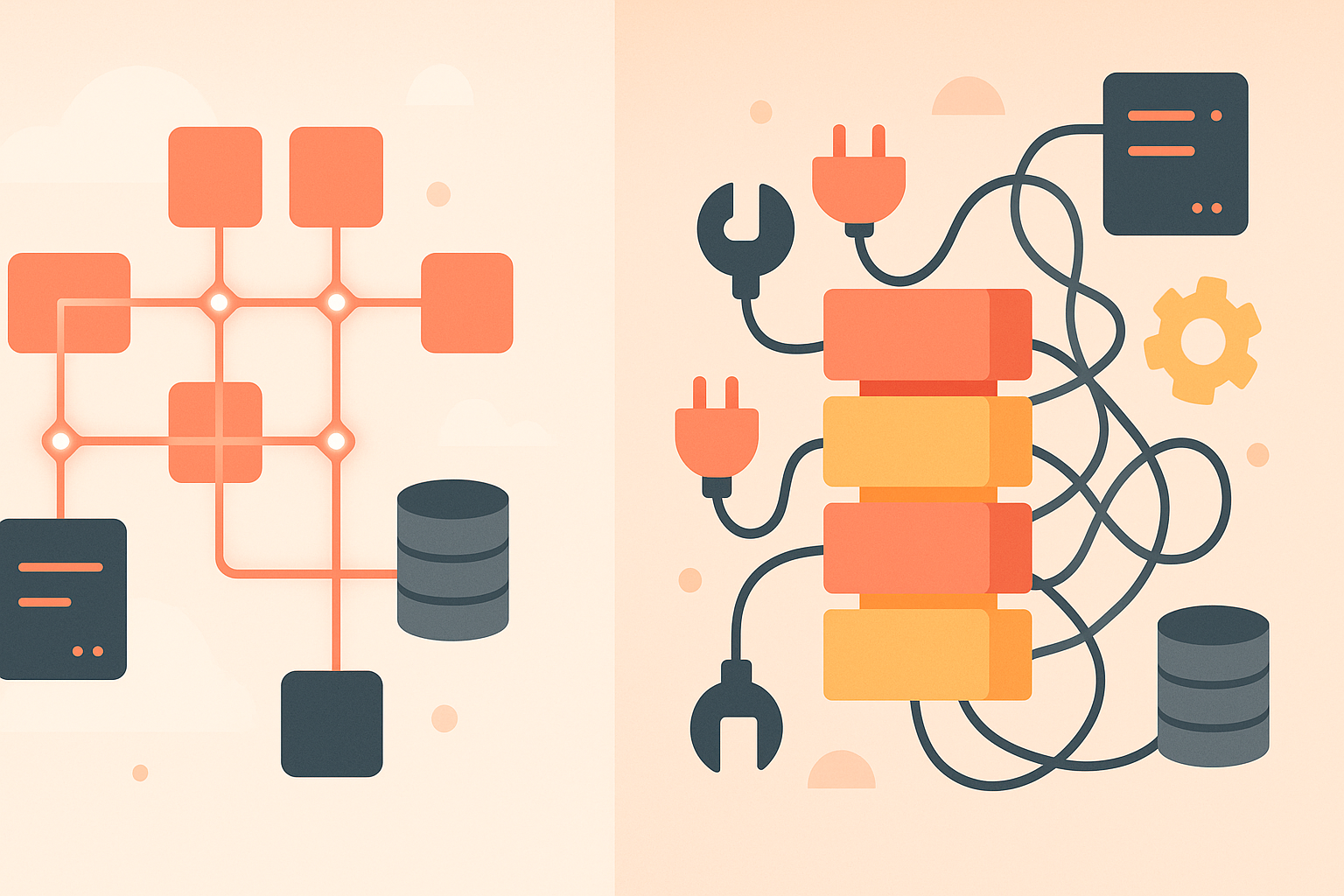
Think of a pipeline as stages: Commit → Build → Test → Security scan → Stage deploy → Canary → Production. Each stage is automated, observable, and has rollback or mitigation controls. IaC ensures environment parity; automated tests and security scans act as quality gates.
Quick Insights
Ten concise terms every engineering leader should know:
- CI/CD pipelines
- infrastructure as code
- automated testing
- DevSecOps
- DevOps consulting services
- managed DevOps services
- CI/CD implementation cost
- GitOps trends
- Cloud-native pipelines
- AI-driven automation
For strategy and SEO-aligned agency support, teams often consult external experts. See how optimization ties into broader digital strategy with SEO Optimization Services.
Mistakes to Avoid
- Automating broken processes: automate only after you optimize the workflow.
- Skipping observability: deploy fast, but ensure logs, metrics, and alerts are integrated.
- Poor test coverage: pipelines that bypass meaningful tests increase risk.
- Neglecting security: incorporate static analysis and dependency checks early.
- One-size-fits-all tooling: match tool complexity to team maturity.
FAQs
What are DevOps services and why do they matter?
DevOps services are offerings that help teams implement automation, culture, and tooling to deliver software faster and more reliably. They matter because they reduce manual errors and accelerate time-to-market.
How does CI/CD reduce deployment risk?
CI/CD reduces risk by automating builds, running tests early, and enforcing quality gates so only validated artifacts reach production.
What is infrastructure as code (IaC)?
IaC defines infrastructure via versioned code so environments are repeatable, reviewable, and testable—removing manual environment drift.
How does automated testing improve release quality?
Automated unit, integration, and end-to-end tests catch regressions faster and ensure new code meets functional requirements before deployment.
What is DevSecOps?
DevSecOps integrates security into the DevOps lifecycle—embedding scans, secrets management, and policy checks into CI/CD pipelines.
Which tools make sense for small teams?
Small teams benefit from GitHub Actions, managed cloud services (AWS/GCP/Azure), Terraform Cloud, and hosted monitoring to reduce operational overhead.
How should enterprises measure ROI?
Track deployment frequency, lead time for changes, change failure rate, MTTR, and business metrics like customer retention and revenue release impact.
What are common pipeline anti-patterns?
Long-running pipelines, manual approval bottlenecks, and unclear rollback procedures are common anti-patterns that slow delivery.
How long does adoption take?
Basic CI/CD can be implemented in weeks; full cultural transformation with IaC and DevSecOps often takes 6–12 months depending on size and complexity.
Where can teams get help implementing this?
Teams can hire managed providers or consulting partners that offer strategy, implementation, and ongoing platform support. For aligned digital strategies, consider SEO for Agencies or integrated services like Professional SEO Services.
Conclusion
Adopting DevOps services with CI/CD, IaC, and DevSecOps transforms delivery velocity and reliability. Start small—automate builds and tests, codify environments, then layer security and observability. Track clear metrics before and after to quantify gains and scale lessons across teams.